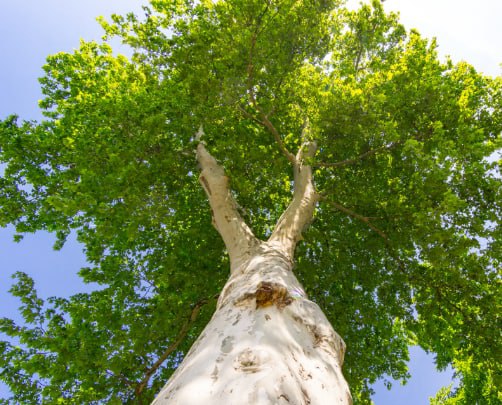
Crown reduction is a skilled tree surgery technique used to reduce the overall height or spread of a tree while retaining its natural shape. It can help manage branches that have grown too close to buildings, restrict light, overhang access areas or place excessive weight on parts of the crown.
Although one carefully completed crown reduction can make a significant difference, it should not always be regarded as a permanent solution. Trees continue to grow and respond to pruning, so some will need periodic attention to remain balanced, healthy and suitable for their surroundings.
Understanding the Long-Term Role of Crown Reduction
Whether crown reduction is a one-off service or part of ongoing maintenance depends on the tree species, its age, condition, growth rate and location. The reason for carrying out the work also matters. A tree reduced to correct a particular structural concern may require a different approach from one managed primarily because it is becoming too large for its setting.
What Does Crown Reduction Involve?
Crown reduction involves selectively shortening branches throughout the outer canopy. Cuts are made back to suitable growth points so that the tree retains a balanced framework and recognisable form.
This differs from indiscriminate cutting or removing the entire upper section of the crown. Professional crown reduction aims to achieve a measured result without creating an unnatural outline or leaving unnecessary wounds.
The work may be recommended to:
- Reduce the weight of extended or heavily loaded limbs
- Increase clearance around buildings and garden features
- Manage a tree that has outgrown the available space
- Improve the balance of an uneven crown
- Limit excessive shading in a garden
- Reduce movement in vulnerable branches
- Retain a mature tree at a more manageable size
The appropriate amount of reduction should be based on the individual tree rather than a standard measurement applied in every situation.
When Crown Reduction May Be a One-Off Service
A single crown reduction may be sufficient when it addresses a specific, non-recurring concern. For example, selective work might restore balance after uneven growth or reduce one section of the canopy that has extended too far over a garden.
One-off work may also be appropriate when:
- The tree has a naturally slow growth rate
- Only a modest reduction is required
- The surrounding space provides room for future growth
- The tree responds steadily to careful pruning
- The purpose is to correct a particular imbalance
- Its long-term size remains suitable for the location
Even when further reduction is not expected, occasional inspections can help identify deadwood, weak branches or changes in the tree’s condition.
Why Some Trees Need Ongoing Maintenance
Crown reduction does not stop a tree from growing. After pruning, new shoots may develop around the cut areas as the canopy begins to recover. The speed and density of this regrowth vary between species and individual trees.
Regular maintenance may be helpful when a tree stands close to a house, driveway, path or neighbouring garden feature. Periodic attention can keep new growth within suitable limits and prevent the crown from becoming excessively dense or unbalanced again.
A planned approach is often gentler on the tree than allowing substantial regrowth to develop before carrying out another major reduction.
The Tree’s Response Determines What Happens Next
A tree’s condition after crown reduction provides useful information for future management. Healthy, well-positioned regrowth may require only selective pruning at a later stage. Dense, upright shoots or rapid extension growth may need closer monitoring.
The response can be influenced by:
- Tree species and natural growth habit
- The age and vitality of the tree
- The amount of foliage removed
- The position and quality of pruning cuts
- Existing structural weaknesses
- Exposure to wind and weather
- Available rooting space
Professional follow-up assessment helps ensure that future work is based on how the tree has actually responded rather than on a fixed schedule.
Why Correct Timing Matters
Crown reduction should be carried out at an appropriate point in the tree’s growth cycle. The preferred timing can vary according to species, condition and the reason for the work.
Repeating the service too frequently may place unnecessary stress on the tree. Waiting too long, however, can allow branches to become overly extended, increasing the scale of the next intervention. A tree surgeon can recommend a sensible maintenance interval after assessing the canopy and its surroundings.
Crown Reduction Should Preserve Natural Form
The quality of crown reduction is measured not only by how much smaller the tree becomes, but also by how well its structure and appearance are retained. Removing too much growth can lead to vigorous regrowth, poor branch development and an unbalanced canopy.
Careful pruning distributes the reduction across the crown and uses suitable branch unions. This helps the finished tree look proportionate rather than abruptly cut back. It also supports more predictable regrowth, which can make ongoing management easier.
Signs That Another Crown Reduction May Be Needed
A previously reduced tree may benefit from further attention if:
- New branches are again approaching a building
- The canopy is obstructing paths or access
- Long limbs are placing weight on weaker unions
- Dense regrowth has developed around earlier cuts
- The crown has become noticeably uneven
- Excessive growth is affecting the use of the garden
- Branch movement has increased during windy conditions
These signs do not automatically mean the whole crown needs reducing again. Selective pruning may be sufficient, depending on the extent and position of the growth.
Creating a Suitable Maintenance Plan
Effective tree management begins with understanding why the tree requires work. A professional assessment can establish whether crown reduction is necessary, how much growth should be removed and whether future maintenance is likely.
For trees in Rye, East Sussex, the aim should be to balance the needs of the tree with the way the surrounding outdoor space is used. A suitable plan may involve occasional inspections, selective pruning or periodic crown reduction rather than repeated heavy cutting.
Conclusion
Crown reduction can be a one-off service when it resolves a particular issue and the tree remains suitable for its setting. For faster-growing trees or those positioned close to buildings and access areas, it is more likely to form part of an ongoing maintenance plan.
The best approach depends on the tree’s species, condition, structure and response to previous work. Rye Tree Surgeons provides professional crown reduction and tree maintenance in Rye, East Sussex. If a tree has become too large, uneven or difficult to manage, contact the team to arrange an informed assessment.
Call us on: 01797 334499
Click here to find out more about Rye Tree Surgeons
Click here to complete our contact form and see how we can help with your tree needs.